

Types of Collagen: Which One Do You Actually Need?
Collagen is everywhere right now - powders, capsules, gummies, drinks, serums. Brands are launching faster than consumers can evaluate them. And most of what's on shelf in India is either the wrong type for the goal being marketed, or so underdosed it won't produce any measurable result.
This is the breakdown I wish existed before we formulated AKYA's collagen range. No hype, just the science and what it actually means for what you're buying.
What Collagen Is and Why Supplementing Makes Sense

Collagen is the most abundant structural protein in the human body. The scaffolding that holds together your skin, joints, tendons, gut lining and bones. From your mid-20s, production declines roughly 1-1.5% per year. By your 30s, this shows up as reduced skin elasticity, slower joint recovery and visible ageing.
The evidence for supplementation is reasonably strong - particularly for skin hydration, elasticity, and joint comfort - but only when you're using the right type at a clinically relevant dose. That's where most products fall short.
The Five Types Worth Knowing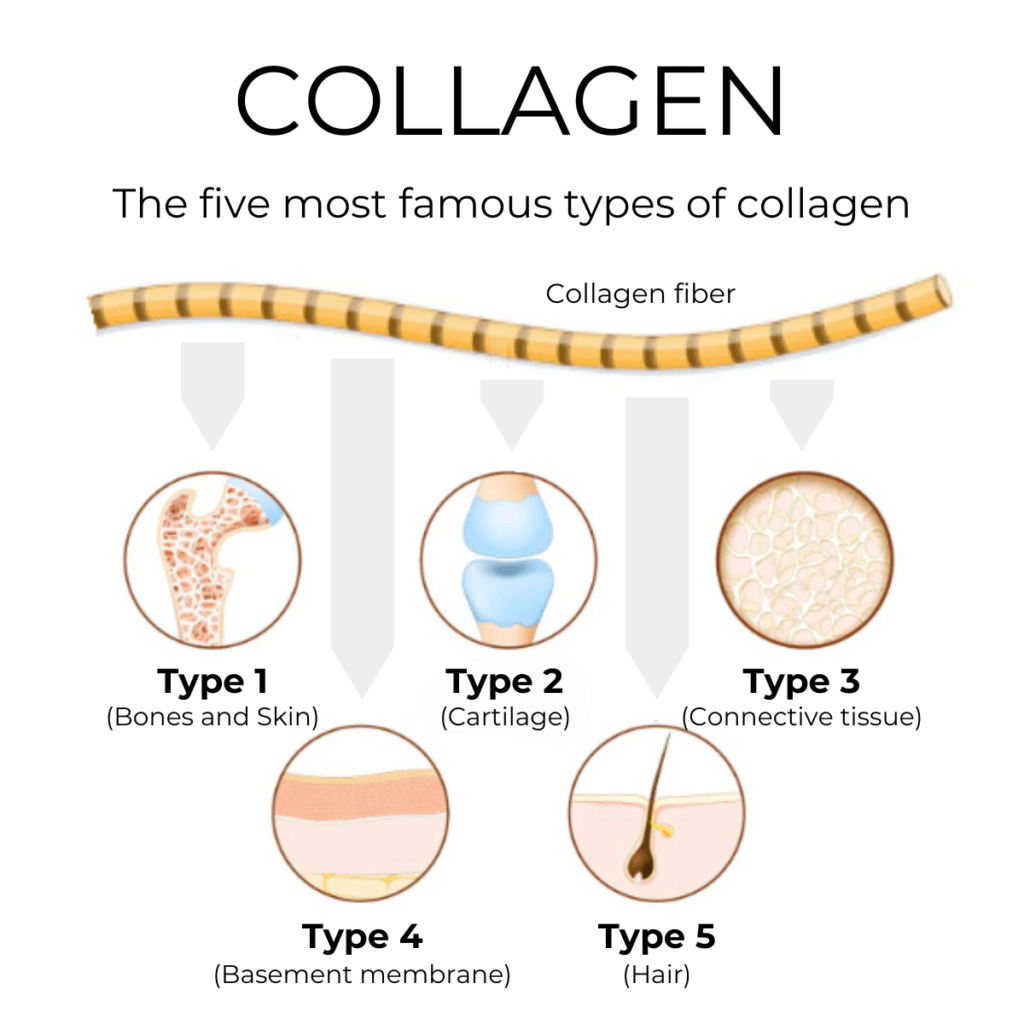
Type I - Skin, Hair, and Nails
Type I is the most abundant collagen in the body. For skin-focused goals - hydration, elasticity, fine lines - this is the one you need. Marine collagen is the best source: smallest peptide size, highest bioavailability, fastest absorption. AKYA uses Nippi FCP-EX, a clinically studied low-molecular-weight fish collagen peptide, at 5,000mg per sachet. The ingredient source matters as much as the type.
Type II - Joints and Cartilage
Type II is the primary collagen in cartilage. If your goal is joint comfort or mobility, this is what you want - not marine. Type II (UC-II) has strong research for joint outcomes and works via immune tolerance, not just structural rebuilding. Marine collagen will not fix your joints. This is one of the most common mismatches between how collagen is marketed and what it actually does.
Type III - Gut and Vascular Health
Found alongside Type I in bovine collagen. Relevant for gut integrity and vascular support. Less talked about, but worth knowing if your goals extend beyond skin.
Type IV - Skin Structure & Barrier Function
Type IV lives in the basement membrane - the foundation layer beneath your dermis. It forms a mesh-like network that supports skin structure and barrier integrity. Not commonly supplemented directly, but critical to understanding why overall collagen health goes deeper than surface-level skin goals.
Type V - Cornea, Hair & Tissue Integrity
Type V works alongside Type I in skin and tendon. Found in the cornea, hair, and connective tissue. Research shows it strengthens the dermal fiber network and supports overall skin resilience. A supporting player - rarely the headline ingredient, but essential to the full collagen picture.
The Dose Problem Nobody Talks About
Clinical studies showing real skin improvement use 2,500-10,000mg of collagen peptides daily, for at least 8 weeks. Most products in India are dosed at 500-1,000mg, buried in a long ingredient stack designed to make the label look comprehensive.
At 500mg, the clinical basis for a skin outcome essentially doesn't exist. You're paying for the idea of collagen, not a dose that produces a result.
Before buying anything: ignore the front of pack. Turn it over, find the collagen dose in milligrams, compare it to the clinical range. If it's not clearly stated, that tells you something too.
Which Type for Which Goal
- Skin, hair, nails, anti-ageing → Marine collagen, Type I, minimum 5,000mg daily
- Joint health → Type II, ideally UC-II form
- Skin + gut → Bovine, Types I and III
- Comprehensive skin support → Type I marine + Vitamin C + Hyaluronic Acid
Vitamin C is non-negotiable - it's a required cofactor for collagen synthesis. Any formulation without it is incomplete.
This Takes Time
Collagen is not a two-week experiment. Studies show measurable improvement at 8 weeks, meaningful change at 12, with consistent daily use. Brands that don't tell you this are optimising for a quick conversion, not your actual result.
Right type. Right dose. Consistent use. That's the whole framework.
Try AKYA's Collagen Range
If you've read this far, you know what to look for.
AKYA Essential Collagen delivers 5,000 mg of Nippi FCP-EX marine collagen peptides per sachet - with Hyaluronic Acid, Vitamin C, Vitamin E, and Biotin.
Clean, effective, and clinically dosed for everyday skin, hair and wellness support.
AKYA Complete Collagen Complex goes a step further - combining 5,000 mg marine collagen with 10 targeted co-factors to support collagen synthesis, hair strength, skin health and overall function.
Two formulas. One approach: efficacy first.